Most residential systems are engineered to cool the indoor air roughly 20 degrees below the outdoor temperature at peak, so on a 100-degree Ogden afternoon a healthy, correctly sized unit may only hold the house around 80, which is the equipment at its design limit rather than a breakdown, and no thermostat setting can push past it.
Most air conditioners are sized to handle around 98 percent of expected conditions, commonly to a design temperature near 95 degrees, so during the hottest 2 percent of days a correctly sized system is expected to fall a little short, a deliberate trade-off that keeps it efficient and comfortable the rest of the year.
The run capacitor gives the compressor the electrical kick it needs to start and keep running, and because it is heat-sensitive, it often overheats and quits on the hottest afternoons, shutting the outdoor unit down while the indoor fan keeps blowing warm air, one of the most frequent heatwave failures a technician finds.
Here is the fact that reframes the whole problem. A residential air conditioner is engineered to cool the indoor air only about 20 degrees below the outdoor temperature, not to a fixed number on the thermostat. HVAC technicians call that gap the temperature differential. On a 100-degree Ogden afternoon, a healthy, correctly sized system doing its job perfectly may only hold the house around 80. At 105 outside, the realistic floor is closer to 85. That is not a malfunction. It is the physics of how cooling works, and setting the thermostat to 65 will not change it. The system simply cannot reach that far below the outdoor temperature, and asking it to try just runs it continuously and can freeze the coil.
This connects to how the equipment was sized in the first place. Most air conditioners are designed around a local design temperature, commonly near 95 degrees, and engineers deliberately size a system to handle roughly 98 percent of the conditions a home will see rather than the most extreme days. That is smart engineering, because a unit sized for the rare record-breaker would cost far more, cycle poorly, and dehumidify badly the rest of the year. The trade-off is that during the hottest 2 percent of days, a correctly sized system is expected to fall a little short. When a homeowner learns that a house holding 80 on a 100-degree day is normal, the phone call changes from a panicked AC repair Ogden request to a question about whether anything is actually wrong.

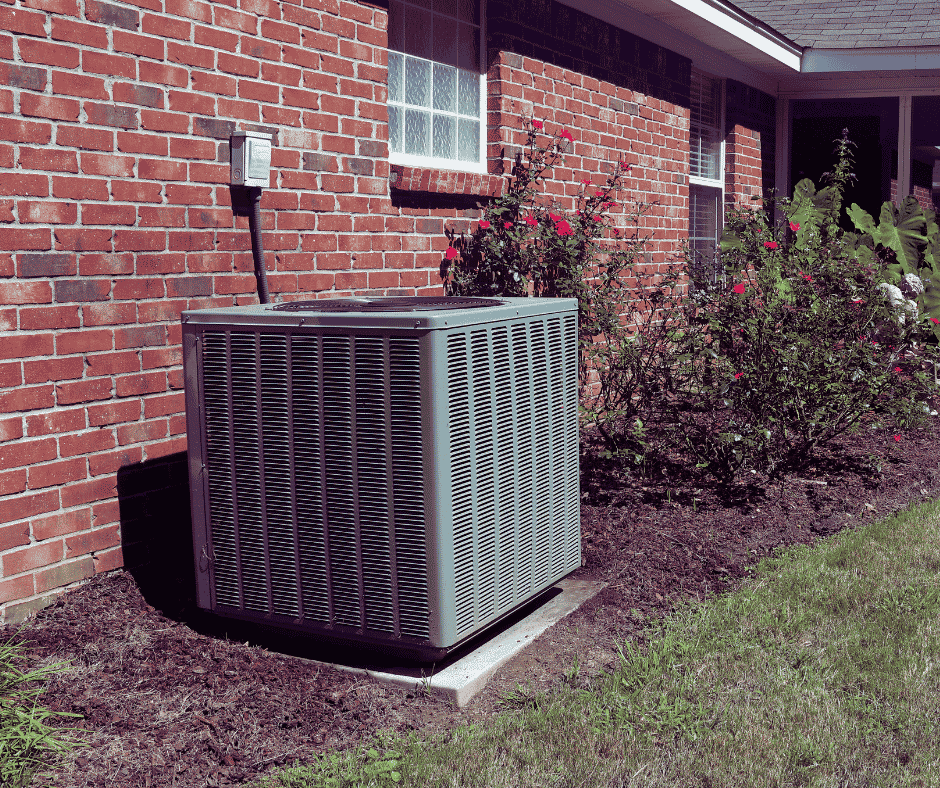
Beyond the differential, extreme heat actively reduces what an air conditioner can do. The system works by dumping the heat it pulls from the house out through the outdoor condenser coil, and the hotter the outdoor air, the harder it is to hand that heat off. As the outdoor temperature climbs, the system runs at higher pressure, the compressor works longer and hotter, efficiency falls, and real cooling capacity drops. The same unit that coasted through a 90-degree day, cycling on and off, will run nonstop on a 103-degree afternoon and still deliver less cooling.
That is why the late afternoon, roughly 2 p.m. to 8 p.m. when the sun and outdoor heat peak, is when a home feels warmest even with the AC running full blast. The house has also been soaking up heat all day, so walls, ceilings, and floors radiate stored warmth the system has to overcome. A healthy unit will typically start catching up as the evening cools, and if it does, that recovery is a strong sign the equipment is fine and was just stretched thin. When the house never recovers even overnight, that is the signal an AC repair Ogden technician should take a closer look.
The useful question during a heatwave is not why the house is not cold, it is whether the gap between indoor and outdoor temperature is holding. If the system is keeping the inside roughly 18 to 20 degrees below the outdoor air, it is working as designed, even if 80 indoors is warmer than a homeowner would like. The problem to watch for is that gap shrinking. If the distance between indoor and outdoor temperature keeps closing over the course of the day, so the home is only getting 8 or 10 degrees of cooling instead of 20, something has actually failed and the heat is exposing it.
A few other signs point clearly to a fault rather than physics. Air from the vents that is warm or room temperature, ice forming on the indoor coil or the copper refrigerant lines, water pooling near the indoor unit, the breaker repeatedly tripping, or the system short cycling, meaning it kicks on and off every few minutes instead of running in long stretches, all mean the system needs service rather than patience. Running nonstop at 3 a.m. after the outdoor air has cooled is another red flag. Any of those is a reason to book an AC repair Ogden visit rather than keep nudging the thermostat.


There is a reason breakdowns cluster on the hottest days of the year, and it is not coincidence. A heatwave is a stress test that pushes a system running at maximum load for days on end, and that sustained strain exposes every weakness that was already there. Components that were marginal under normal conditions fail when they are pushed to the limit. The result is that an AC repair Ogden call volume spikes right alongside the temperature, because the heat is finding the faults that a mild summer would have hidden for another year.
A few culprits show up again and again. The run capacitor, the part that gives the compressor the electrical kick it needs to start and keep running, is heat-sensitive and a frequent heatwave casualty, often quitting on the hottest afternoon and shutting the outdoor unit down while the indoor fan keeps blowing warm air. A dirty condenser coil that could shed heat fine on a mild day cannot keep up when the outdoor air is already scorching. A slow refrigerant leak that went unnoticed in spring leaves the charge too low to handle peak load, and an aging compressor near the end of its life often chooses the worst possible day to give out. These are the failures an AC repair Ogden technician sees most in July.
Sometimes the equipment is healthy and the home is the problem. A house gains heat all day through its walls, windows, and roof, and if that heat comes in faster than the AC can remove it, the indoor temperature climbs no matter how hard the system runs. An Ogden attic can reach well past 140 degrees on a hot afternoon, and ductwork running through that space loses cooling to the heat before it ever reaches the rooms, with studies suggesting a fifth to nearly a third of conditioned air can be lost through duct leaks. Poor insulation, unsealed windows, and big south- and west-facing glass all let heat pour in.
None of that is a reason to replace a working air conditioner, but it does explain why two identical homes on the same Roy or South Ogden street can feel completely different in a heatwave. When a diagnosis shows the equipment is performing to spec, the real fix may be sealing ductwork, adding insulation, or addressing solar gain rather than touching the AC. A good AC repair Ogden visit sorts out which side of that line a home falls on, so a homeowner is not paying to fix a machine that is already doing its job.

The instinct to crank the thermostat down to 65 during a heatwave works against a homeowner. The system cannot reach that far below the outdoor temperature, so all that setting does is run the unit continuously and, in some cases, freeze the coil, which leaves the house warmer, not cooler. A steadier setting in the mid to high 70s lets the system hold its differential without being asked to do the impossible. If ice shows up anywhere on the system, the right move is to shut it off and switch the fan to on so the ice can thaw before a technician arrives.
When the warm air, the shrinking gap, the ice, the tripping breaker, or the short cycling appears, that is the point to call rather than wait, because a system struggling today is often down entirely tomorrow. Extreme heat is also a genuine safety issue for older adults, young children, and pets, which is why 24/7 emergency AC repair Ogden residents can reach matters most during a heatwave. Catching a fault early gives the best chance of a same-day fix before the house becomes dangerous.
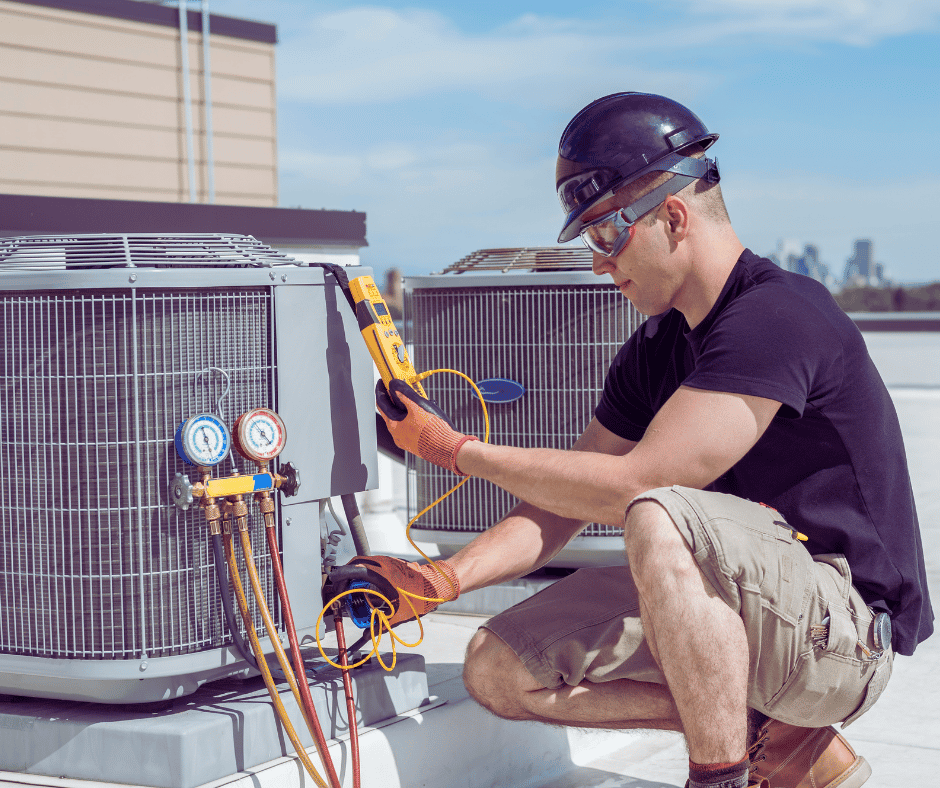
Most heatwave failures are repairs, not replacements. A blown capacitor, a dirty condenser, or a low charge found after locating the leak are common fixes that get a system cooling again quickly. A technician diagnoses by checking the differential the system is actually delivering, the refrigerant pressures, the compressor's amperage draw, and the electrical parts that heat tends to take out. Refrigerant work is handled only by EPA-certified technicians, and a low charge always means a leak to find rather than a top-off to add.
When the compressor is cooked from years of overheating, or the system is aging and can no longer hold even a normal hot day, the conversation shifts to replacement, and age and refrigerant type factor in. Systems installed before January 1, 2025 use the older R-410A refrigerant, while new equipment uses R-454B, which is part of weighing a major repair on an older unit against a new system. One Hour Ogden works from StraightForward Pricing, laying out the diagnosis and the options before any work begins so a homeowner decides with the full picture rather than under heatwave pressure.
The most reliable way to avoid a heatwave breakdown is to catch the weak parts before the heat finds them. A spring tune-up that tests the capacitor, cleans the condenser coil, verifies the refrigerant charge, and checks the electrical connections turns the failures that would have struck in July into inexpensive fixes in April. Heatwave breakdowns almost always happen in systems that skipped that annual service, and once the temperatures spike, appointment availability across the valley tightens fast.
For homeowners who would rather not track it, a club membership maintenance plan brings a technician out on schedule to handle the seasonal checkup. The goal is to enter the heart of an Ogden summer with a system that has already been proven ready, so a heatwave becomes a stretch of hot weather rather than a no-cool emergency during the busiest week of the year. One Hour Heating & Air Conditioning of Ogden is an independently owned and operated local franchise, owner-led by Matt McFarland, serving Ogden and the greater Weber and Davis County market including North Ogden, South Ogden, Roy, Riverdale, Washington Terrace, Clearfield, and Layton. The company is Utah Licensed, Bonded, and Insured, its technicians hold EPA, RMGA, and BPI certifications, and it holds a 5-star rating across more than 568 Google reviews. Homeowners get upfront StraightForward Pricing, a 100 percent satisfaction guarantee backing materials, labor, and craftsmanship for up to two years, financing options, 24/7 availability, and the Always On Time Or You Don't Pay A Dime promise, which means if the technician is even one minute late to the scheduled window, the visit is free. When the house will not cool in a heatwave and the gap keeps shrinking, homeowners who need AC repair Ogden can rely on can call One Hour Heating & Air Conditioning of Ogden at (385) 485-6550 for a straight diagnosis and upfront pricing.

Redirect to:
|
This page is a redirect. The following categories are used to track and monitor this redirect:
|